Our Blogs
Notes from the team building organization memory: essays on AI memory, agents, and how organizations remember.
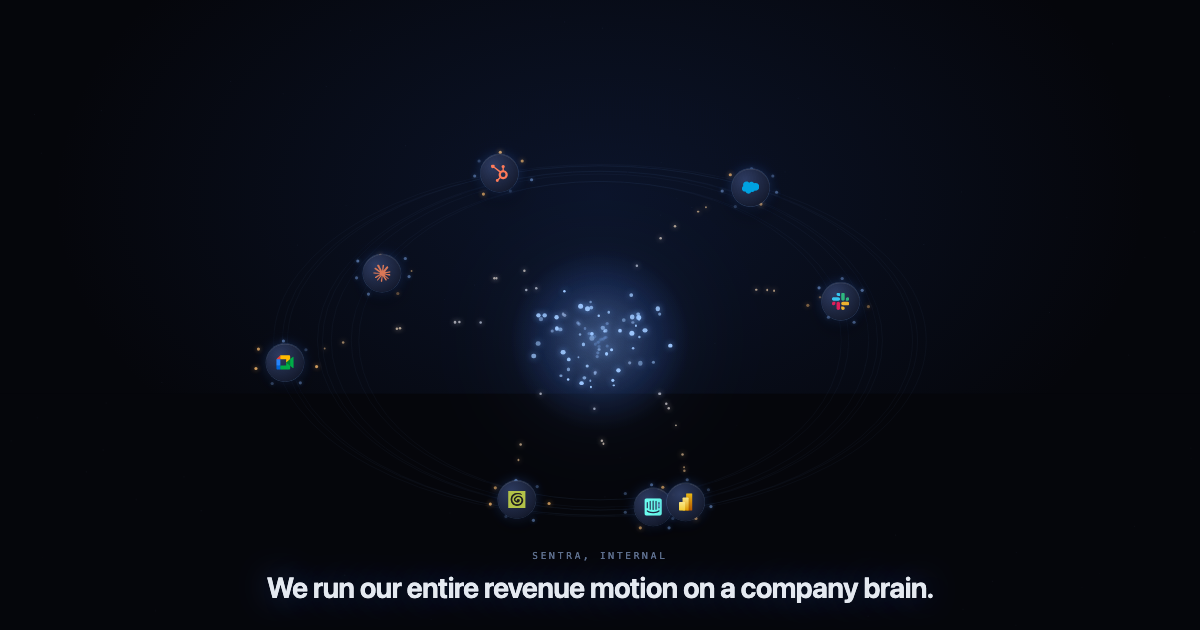
How We Run Revenue on a Company Brain
Every call recorded, every email logged, every deal scored, and you still find out what you promised a customer from the customer. So we put the question to our own product. Five commitments came back, none tracked anywhere, one contradicting an agreed number.
Read More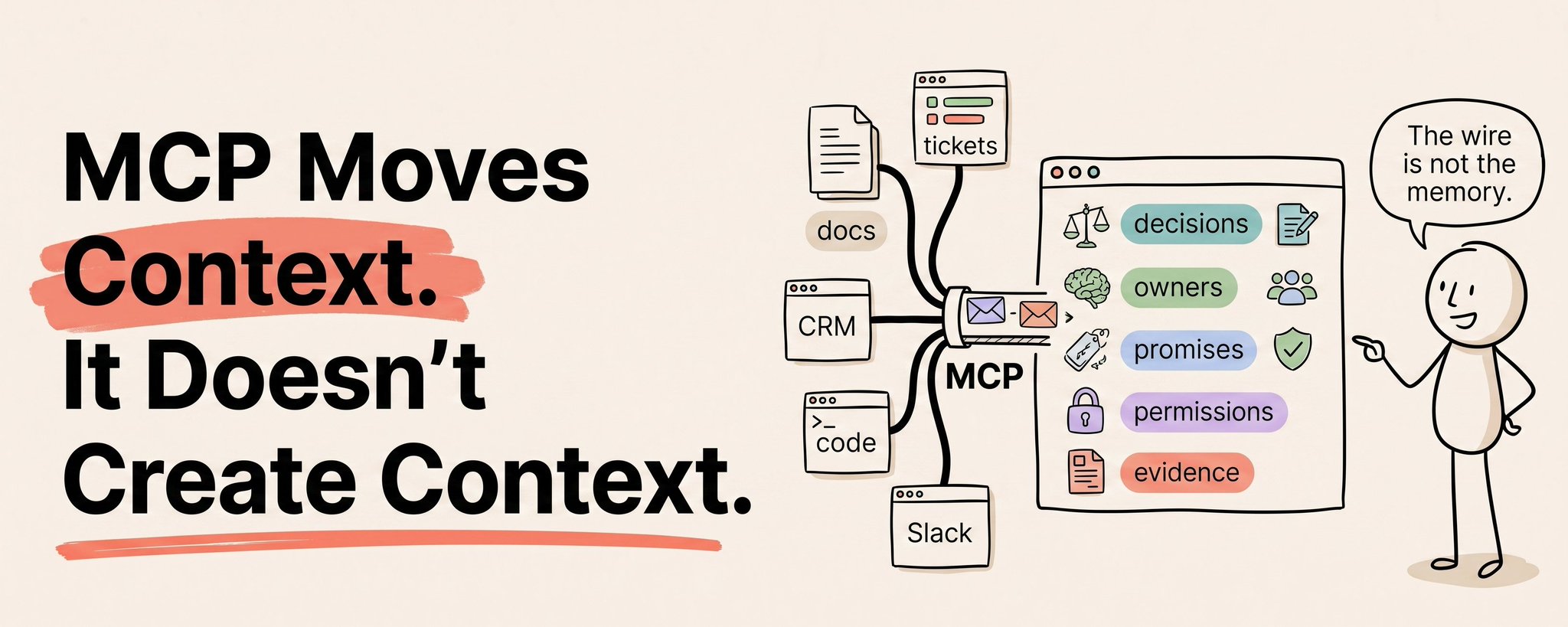
MCP Moves Context. It Doesn’t Create It.
The first time you connect Claude to a real tool and watch it work, it feels like the future has arrived. It can read a file, inspect a database, search a…
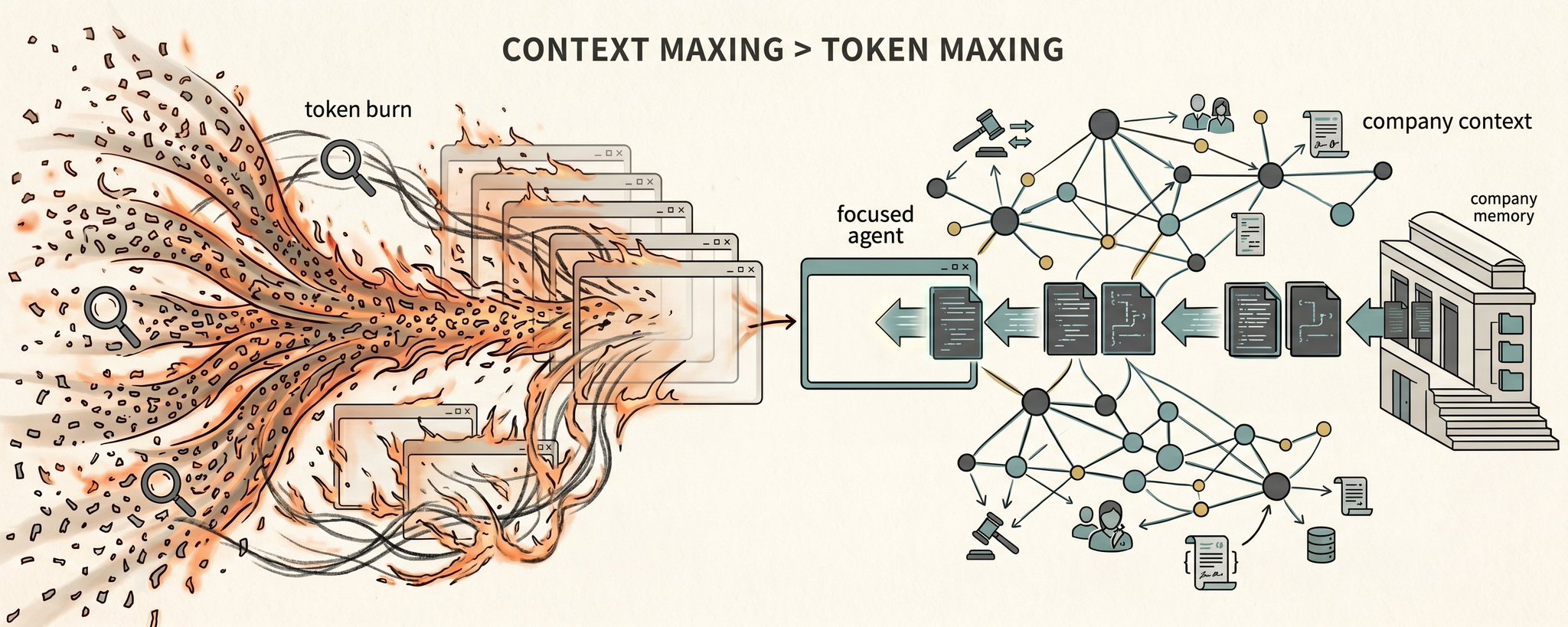
Contextmaxxing > Tokenmaxxing: Why Better Memory Beats Burning More Tokens
At some point every new primitive becomes a bill. Cloud did it about a decade ago: compute, storage, bandwidth, logs, data warehouses, GPU hours. Teams…
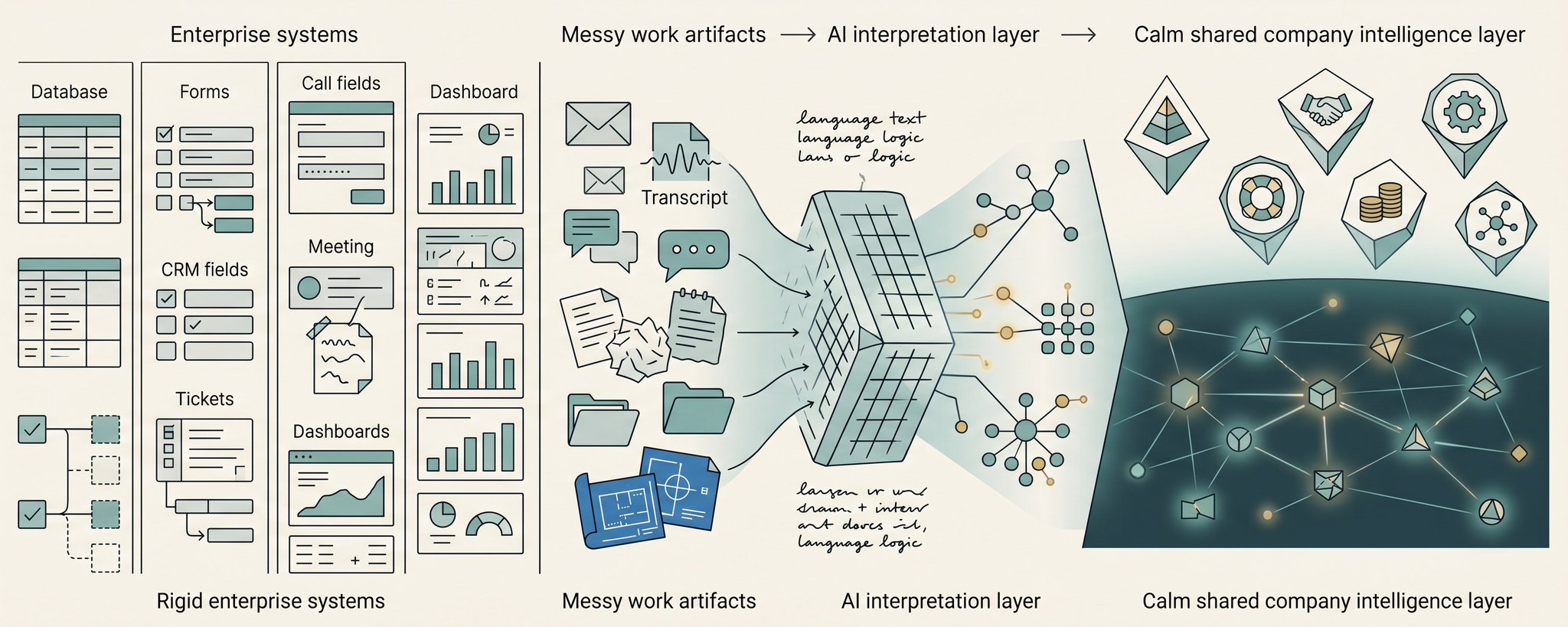
From Systems of Record to the Company Brain: Why AI Needs Shared State, Not Just Smarter Tools
Enterprise software has always begun with one promise: tell me what is true. A system of record is the application a company treats as the authoritative…
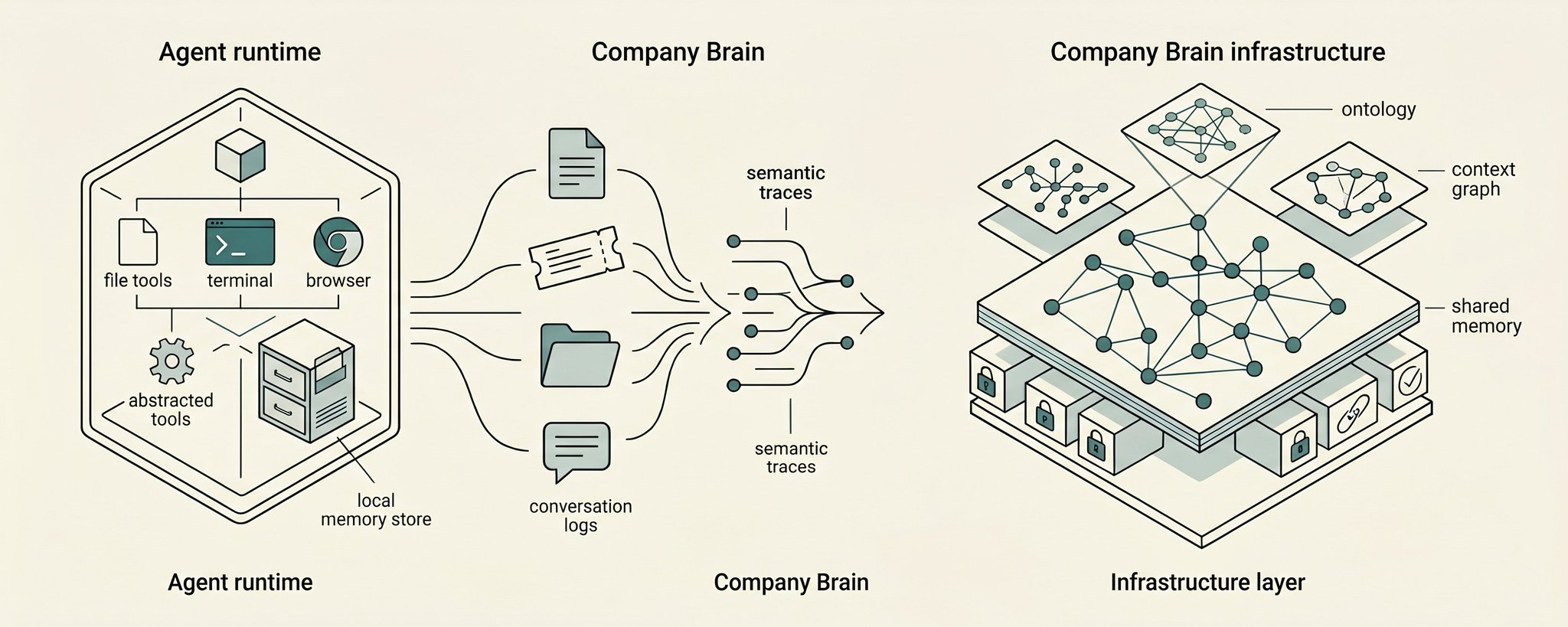
Claude Managed Agents Point to the Next AI Infra Layer: Company Brain
Claude Managed Agents are a useful signal for where the AI stack is going. Anthropic describes Managed Agents as pre-built, configurable agent…
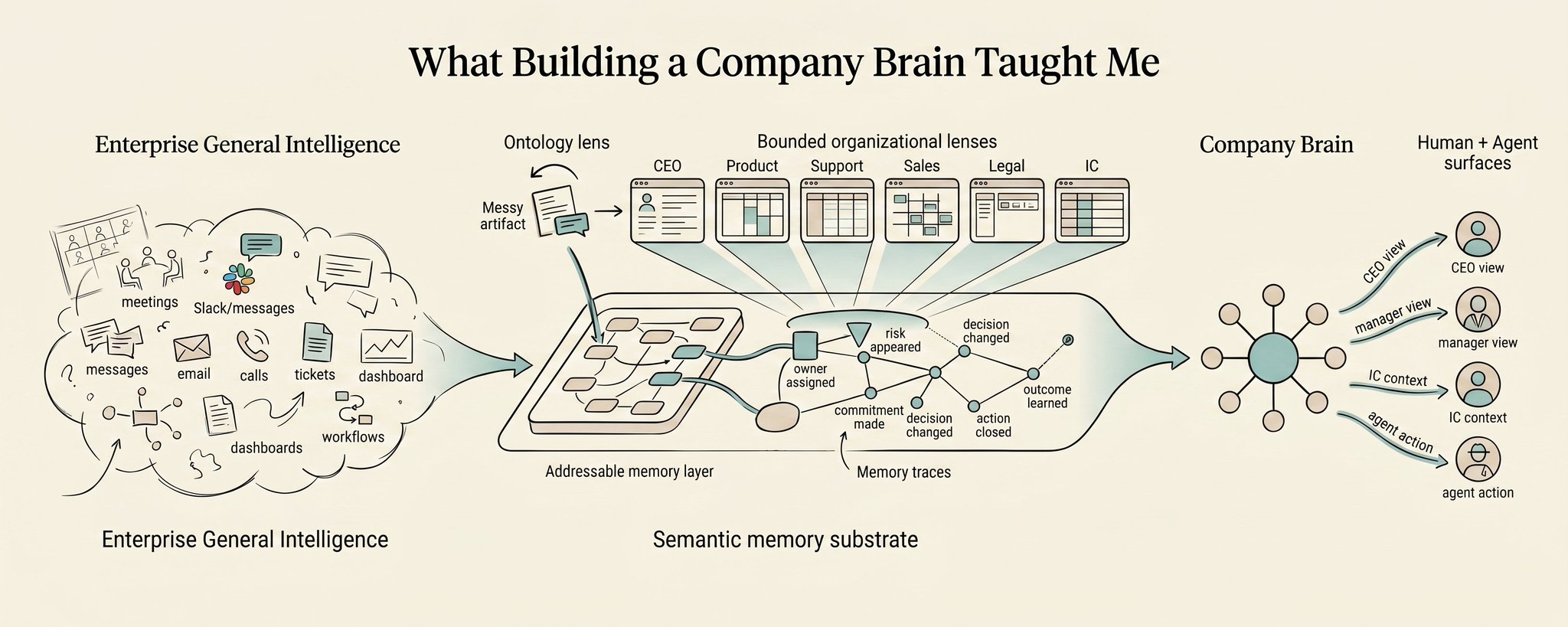
What Building a Company Brain over the last Year Taught Me
We did not start by calling it Company Brain. Our first name for what we were building was Enterprise General Intelligence. The thesis was that some…
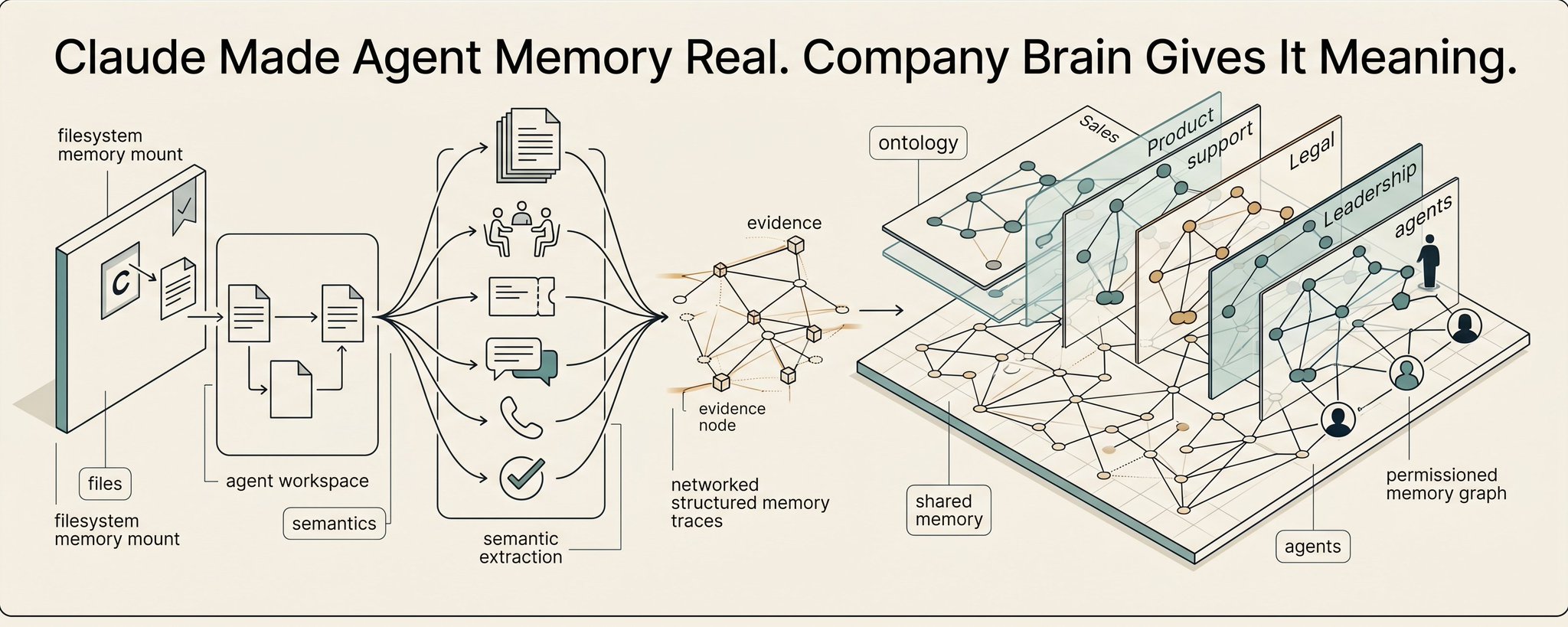
Claude Made Agent Memory Real. But Semantics and Ontology Are Still Missing
Claude’s newest Managed Agents announcement is a useful marker for where enterprise AI is going. Anthropic describes “dreaming” as a scheduled process…
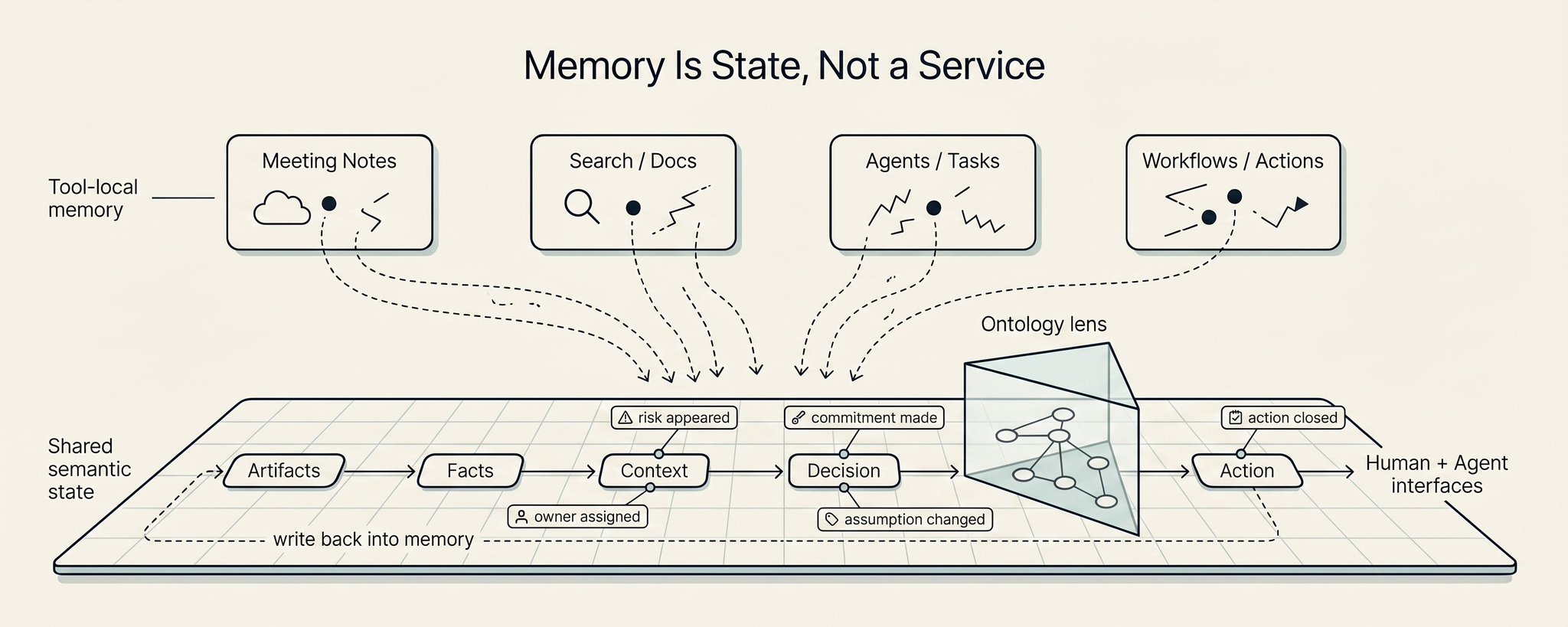
Memory Is State, Not a Service
Every AI tool now wants to remember. Meeting recorders remember conversations, search products remember documents, agents remember tasks, and workflow…
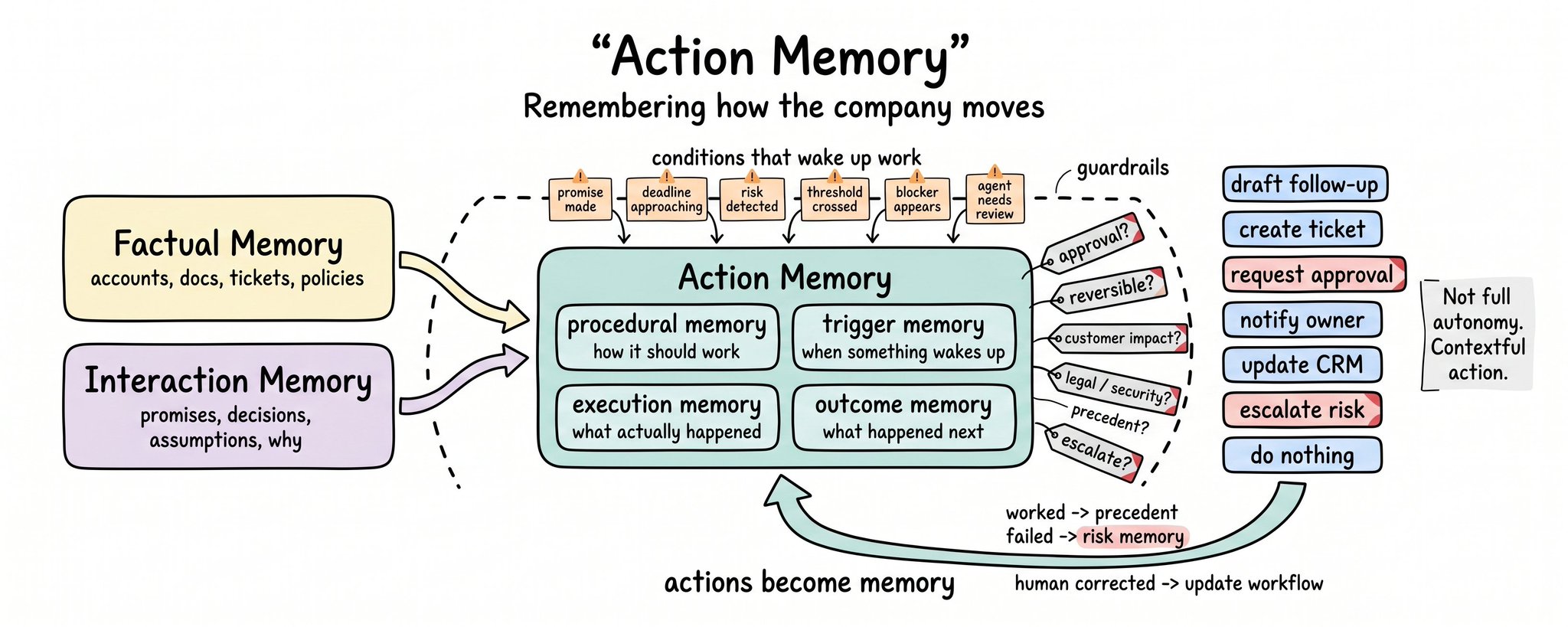
Company Brain, Part 4: Action Memory
Companies do not only forget what happened or why a decision was made. They forget how work actually gets done, especially when the work crosses people,…
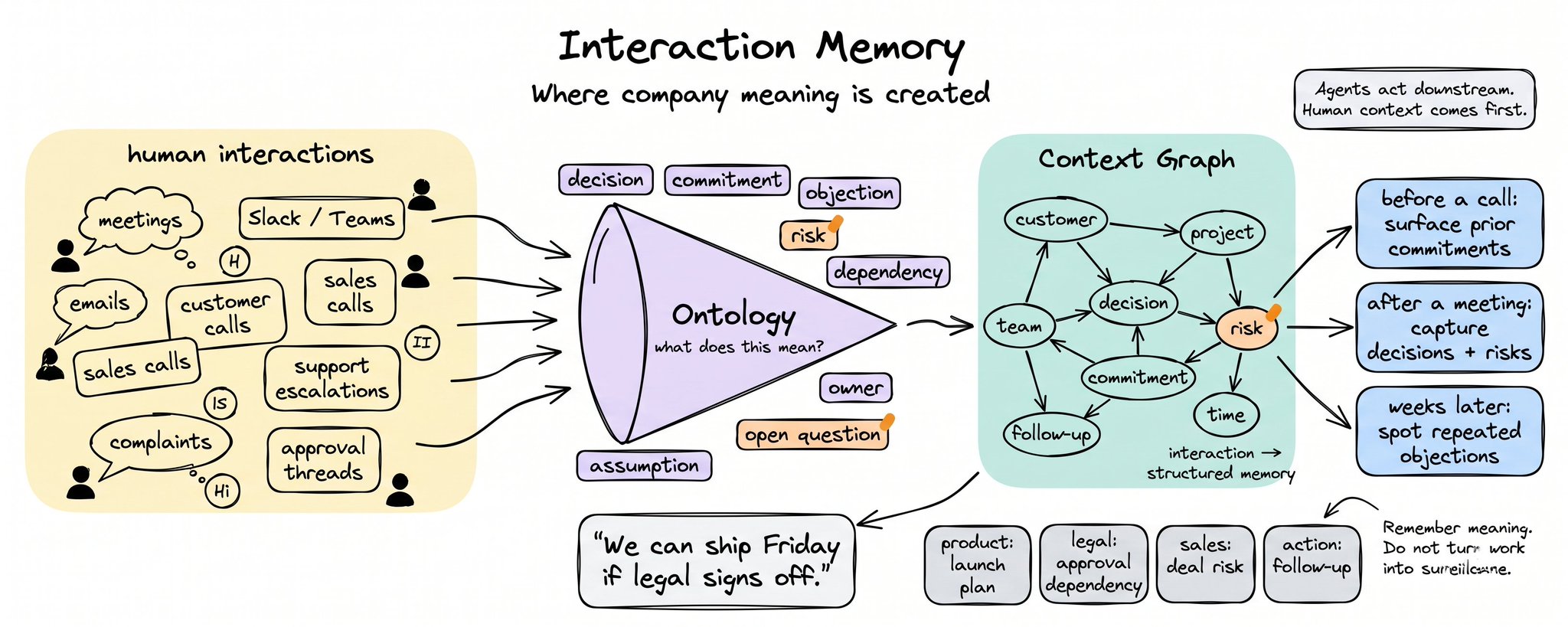
Company Brain, Part 3: Interaction Memory
Almost everything important in a company happens in meetings, messages, or emails. Interaction memory is how a company brain captures it.
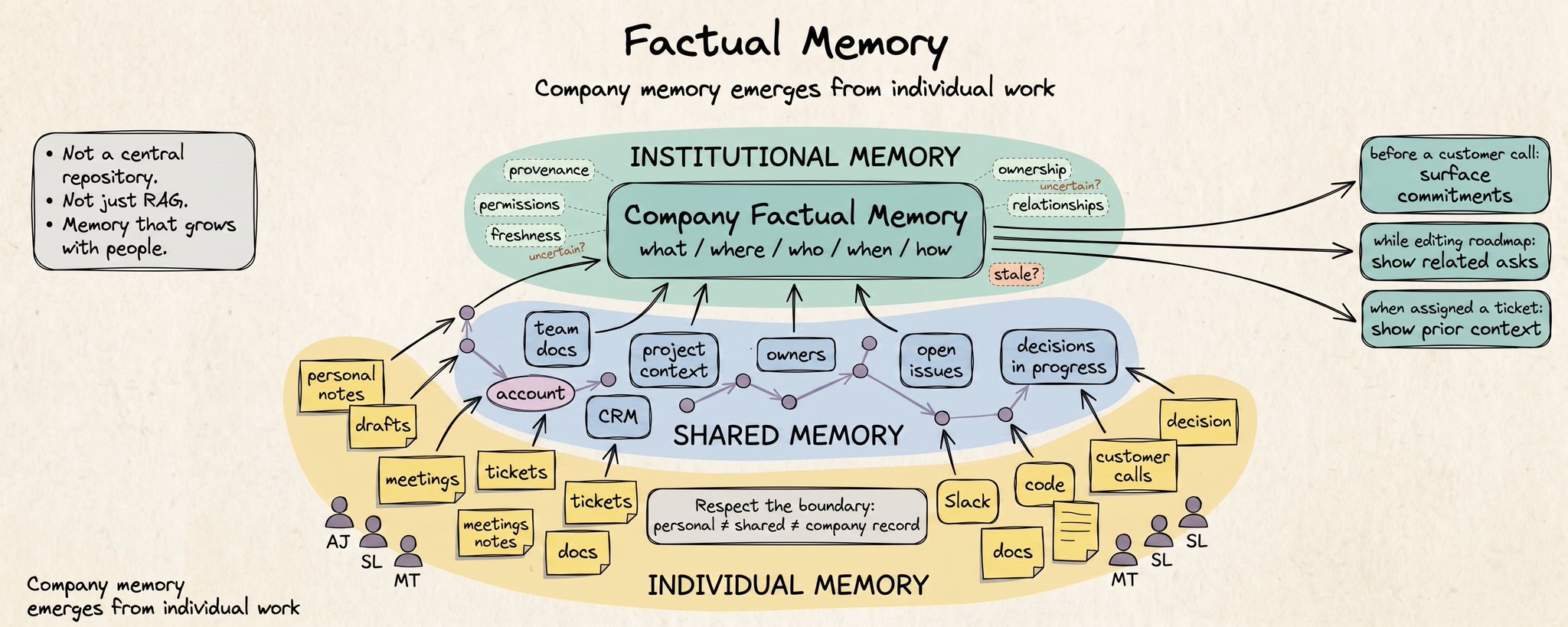
Company Brain, Part 2: Factual Memory
In the first piece, I argued that a real Company Brain needs three kinds of memory: factual memory, interaction memory, and action memory. Factual memory…
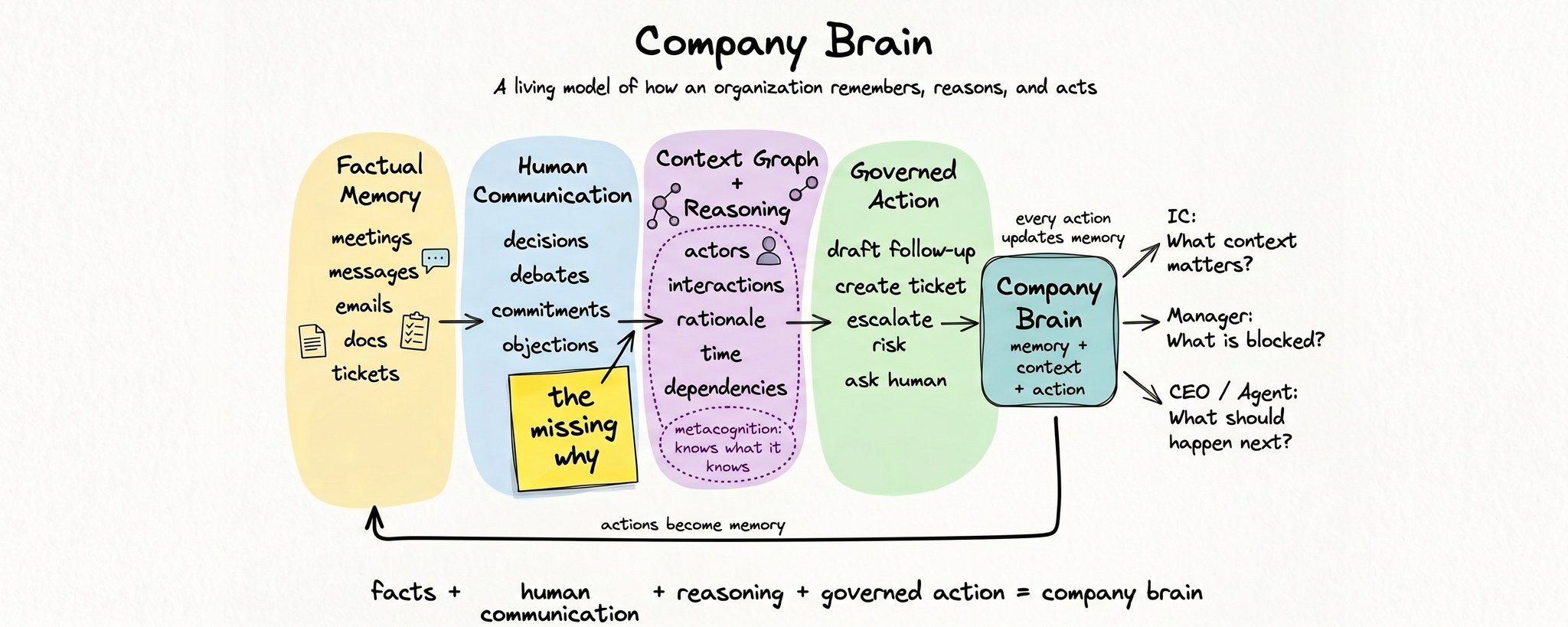
Company Brain: Why Most Companies Have Data But No Memory
One of the hardest parts of any organization is institutional friction. Conversations lose context. Meetings create ambiguous follow-ups. People leave…
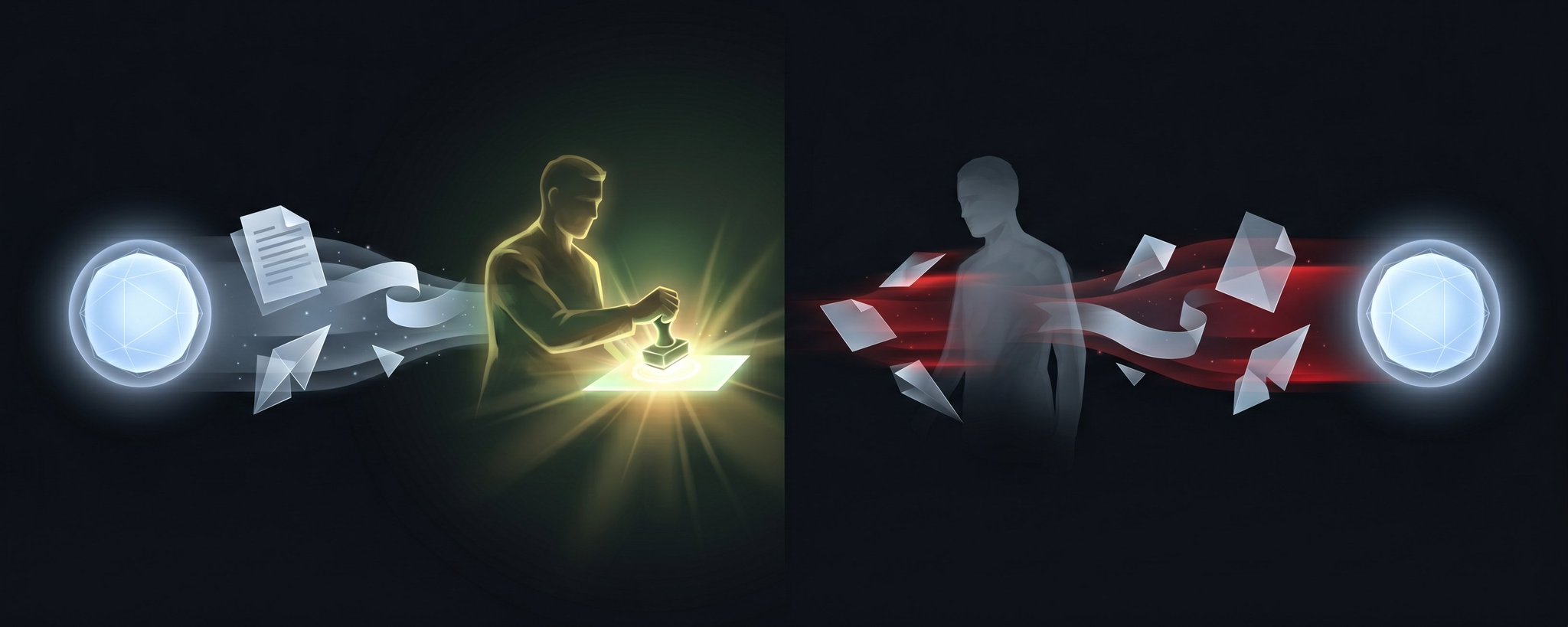
Who Signs? The Anthropic Paradox and the $40 Trillion Choice
The augmenting and replacement futures use the same models and the same tools. The thing that separates them is a design choice about where consequence lands.
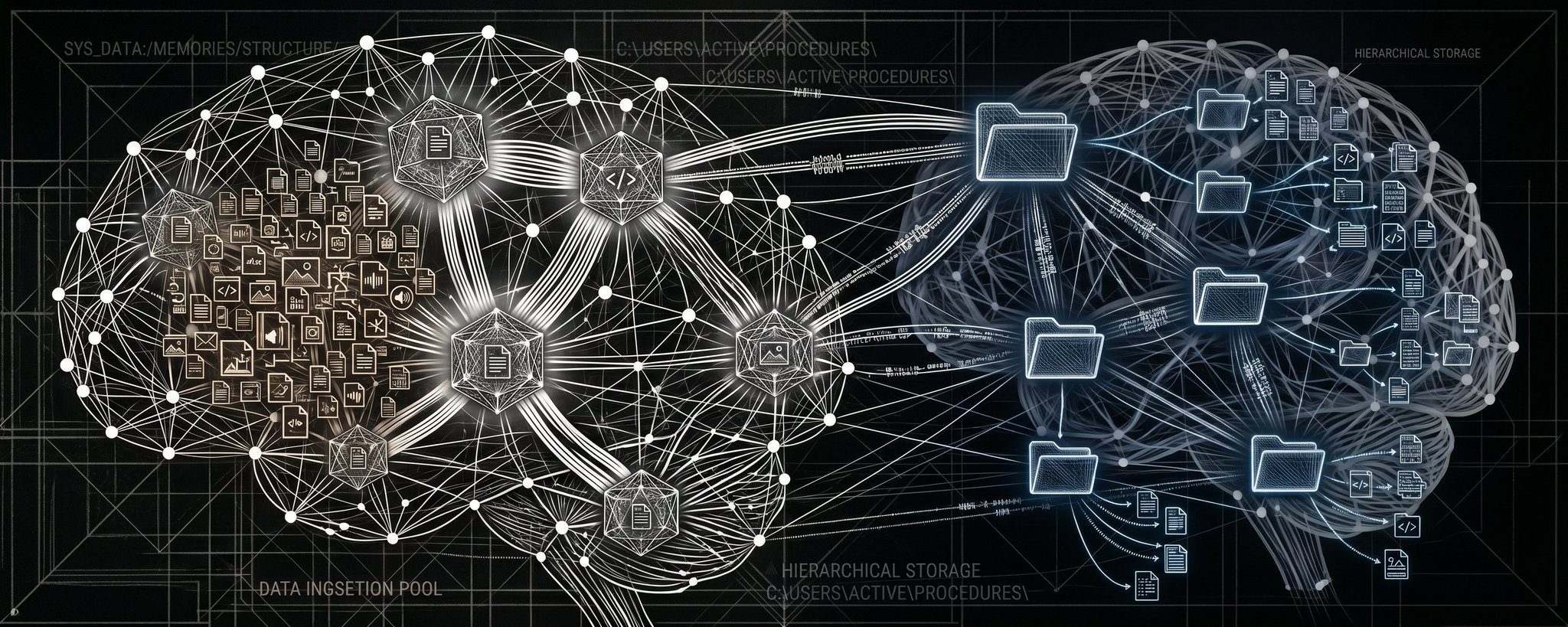
The Skeleton of Remembering: Why Your Filesystem Is a Brain Waiting to Happen
A designer sees the Golden Gate Bridge and remembers International Orange. An engineer sees cables. A biologist remembers a whale. Same object, three…
The Price of Meaning: Why RAG, Knowledge Graphs, and Every Semantic Memory Will Always Fail
Forgetting and false recall are mathematically, provably, inevitable for any memory system that organises information by meaning. Not just embeddings. Not…
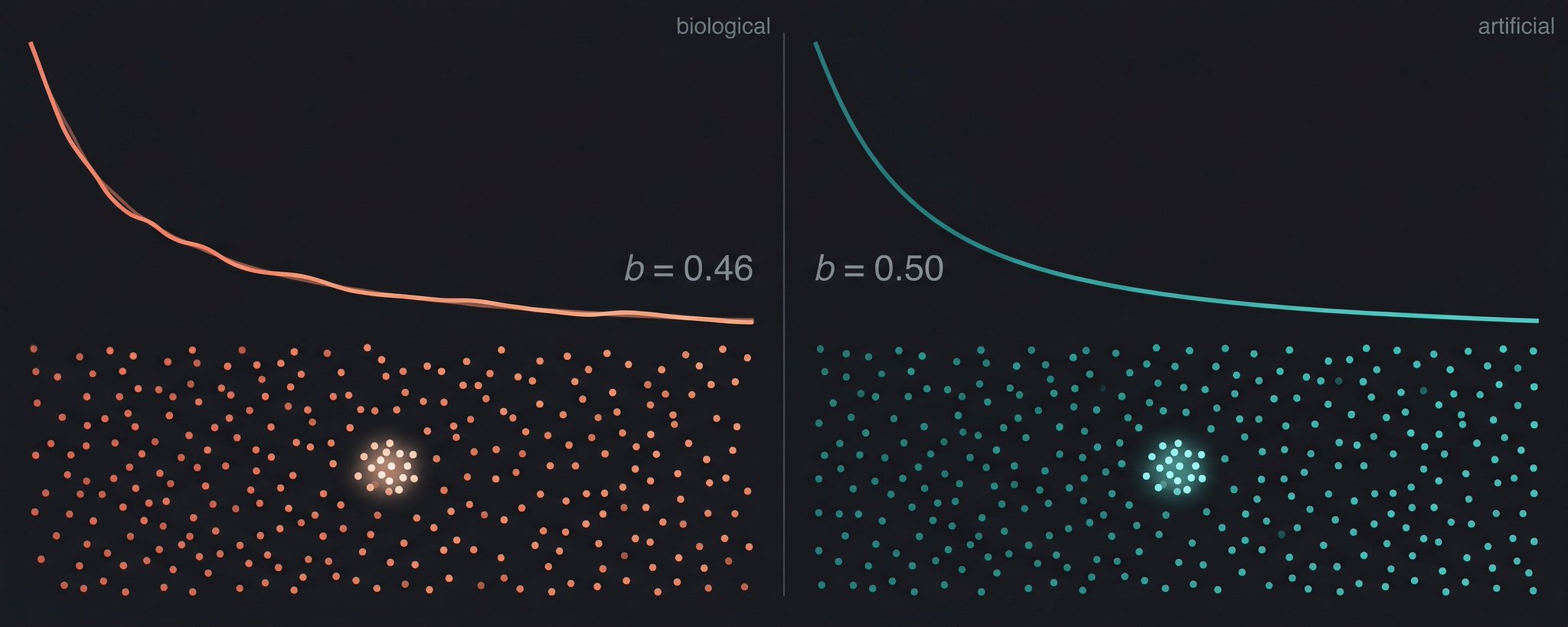
Geometry of Forgetting: Why Brains and LLMs Fail EXACTLY the Same Way
Memory systems for LLMs forget EXACTLY like humans, reproducing the exact numbers from some of the most replicated experiments in clinical psychology.

Variance is Not Information: The Shaped Cache Experiment
After the right rotation, keys need only 1 bit each: just the sign, positive or negative. Key compression is a solved problem. The entire remaining…

3% Is All You Need: Breaking TurboQuant's Compression Limit via Spectral Structure
Only 4 out of 128 dimensions in the KV cache carry meaningful signal. The other 124 are noise. This holds across six models in four families.